Before Tazewell Was a Town
Author:
Before Tazewell was a courthouse town, before Jeffersonville took the name, before our Main Street, storefronts, mountain roads, and family stories carried it as home, the name Tazewell was already written into Virginia’s Revolutionary history.
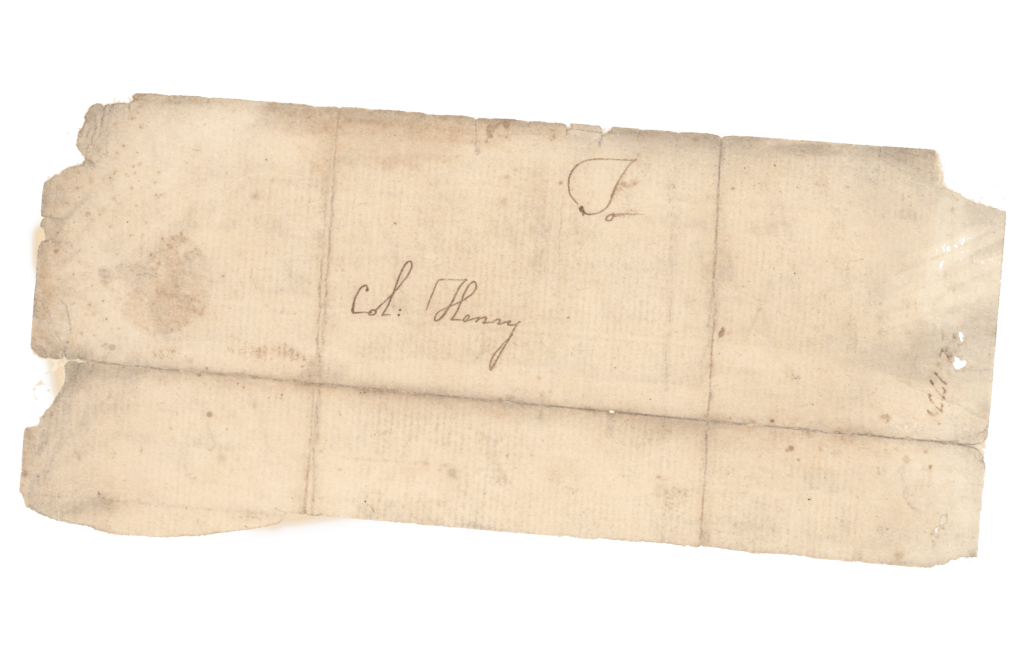
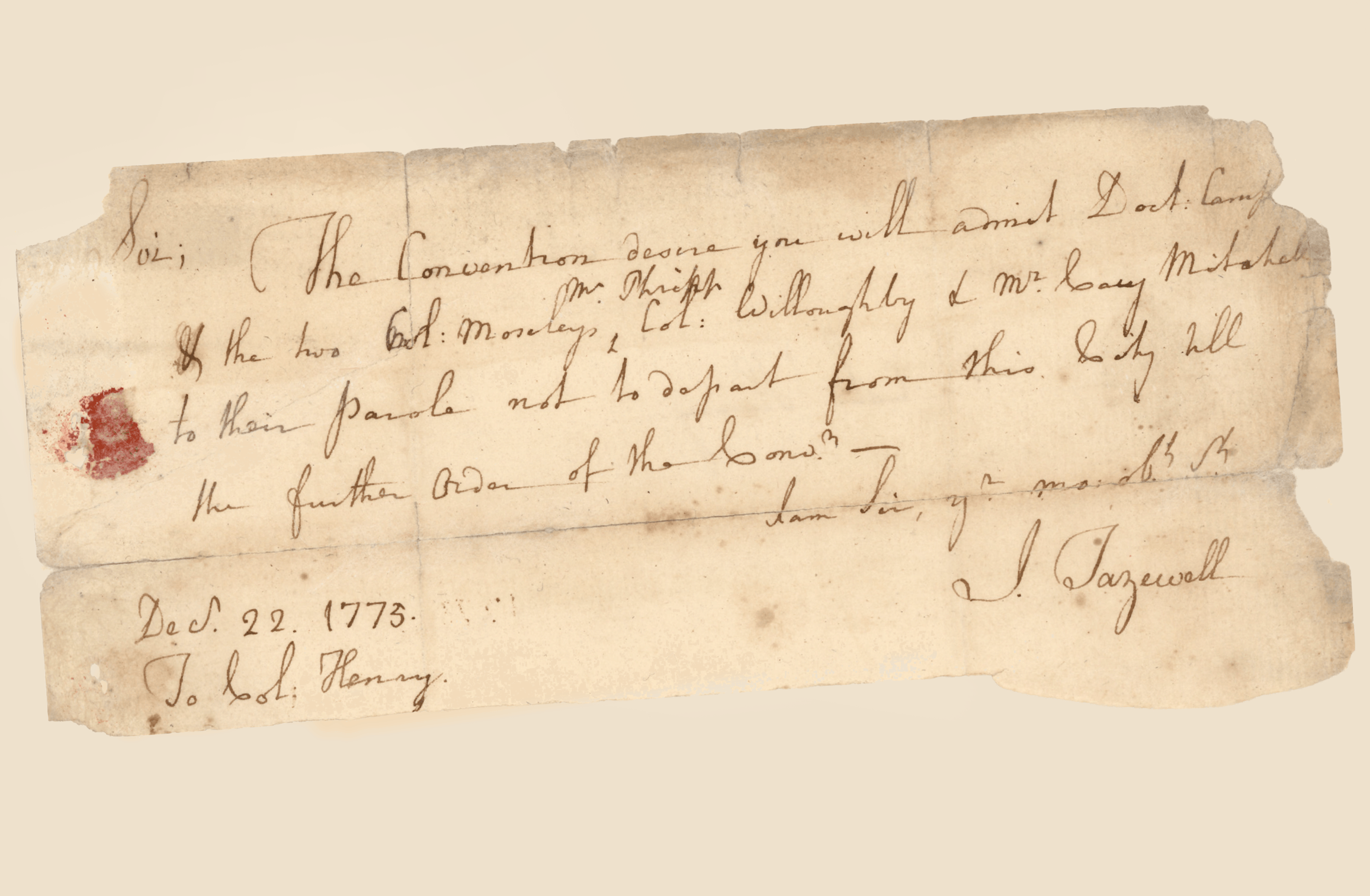
I recently came across an original letter dated December 22, 1775, written by John Tazewell to Colonel Patrick Henry. The letter is part of the Virginia Revolutionary Conventions records held by the Library of Virginia, and the original carries John Tazewell’s own signature.
That is the part that stops me.
A signature has a different weight than a printed name in a book. It pulls history out of the distance. Someone sat down with ink and paper in a moment when Virginia was no longer simply waiting on the Crown. The old order was breaking. The royal governor’s authority was fading. The colonies were moving toward open war. Virginia was beginning the difficult work of governing itself.
And there, in that fragile space between colony and commonwealth, was John Tazewell, doing the paper-and-ink work of a revolution.
The letter was written during the Fourth Virginia Revolutionary Convention, which met from December 1775 into January 1776. These conventions gave Virginians an alternative form of government before the new state government was organized under the Virginia Constitution of 1776. It is easy now to look back and see independence as inevitable, but it was not inevitable to the people living through it. Every decision carried risk. Every name on a document could matter.
This particular letter concerns paroles for several men. On the surface, that sounds like a dry government matter. But in December of 1775, paroles were tied to loyalty, custody, trust, and control during a time when civil authority was being tested. Virginia was trying to hold itself together while preparing for a war that would change the world.
We remember Patrick Henry for the fire. We remember the speeches, the defiance, the famous words.
But this letter reminds us that revolution also depended on records. It needed clerks, letters, signatures, instructions, legal judgment, and men steady enough to keep order when the ground was moving beneath them.
John Tazewell was one of those men. He served as clerk of several Virginia Revolutionary Conventions and later served as Clerk of the House of Delegates. He was part of the machinery that helped Virginia move from royal colony toward self-government. He was not standing on a battlefield in this letter. He was doing something quieter, but still essential. He was helping turn a revolution into a functioning government.
That matters to us because of the name.
Tazewell County was later named for Henry Tazewell, a Virginia statesman and U.S. Senator. The town itself was once known as Jeffersonville before it was renamed Tazewell in 1892. So this letter is not the origin story of our town in a simple, straight line. It is something subtler and maybe even more meaningful.
It shows the Tazewell name before it became our county name. Before it was carved into courthouse stone, painted on signs, printed on maps, and spoken as home.
Before Tazewell was geography, it was already part of Virginia’s public life.
That is why holding an original like this feels different. A digital record tells you what something is. An original signature reminds you somebody was there. A man shaped those letters by hand and sent them to Patrick Henry in one of the most uncertain seasons Virginia had ever faced.
Nearly 250 years later, that same name sits at the center of our own mountain town.
We pass it every day without thinking much about it. Tazewell becomes an address, a courthouse, a school name, a business name, a place we are from or a place we came back to. It becomes ordinary because it is familiar. But history has a way of reopening familiar things.
A folded letter can do that.
A signature can do that.
A name can do that.
This piece reminds us that local history is rarely as small as it first appears. Our town may sit tucked inside the mountains of Southwest Virginia, but the name it carries reaches back into the formation of Virginia itself. It connects us to Williamsburg, to Patrick Henry, to the Revolutionary Conventions, and to a time when men were trying to build order out of uncertainty.
That is the quiet power of this letter.
It does not shout. It does not need to.
It simply survives.
And sometimes survival is the story. A piece of paper made it through wars, generations, courthouse fires, forgotten boxes, changing hands, changing towns, and changing meanings. And now it sits in front of us as a reminder that history is not always buried in the ground or locked behind monuments.
Sometimes it is ink.
Sometimes it is a name.
Sometimes it is a signature, still carrying weight after all these years.